
 WeHomeCare Family
 WeHomeCare Living
 WeHomeCare Connect
 WeHomeCare Campus
 WeHomeCare Omnibus
All departments
A section of the publication
Guides
Every guide on the hub, by department and section.
- A break from caring, and who can step inA break can be an hour or a fortnight, and the people who cover can be family, volunteers or paid help. Here is how to picture one, line up cover and hand over well.
- Bringing a carer into someone's homeA new carer walks into a home full of habits nobody has ever had to explain. A careful start, clear preferences and early, plain conversations can give the arrangement a better footing.
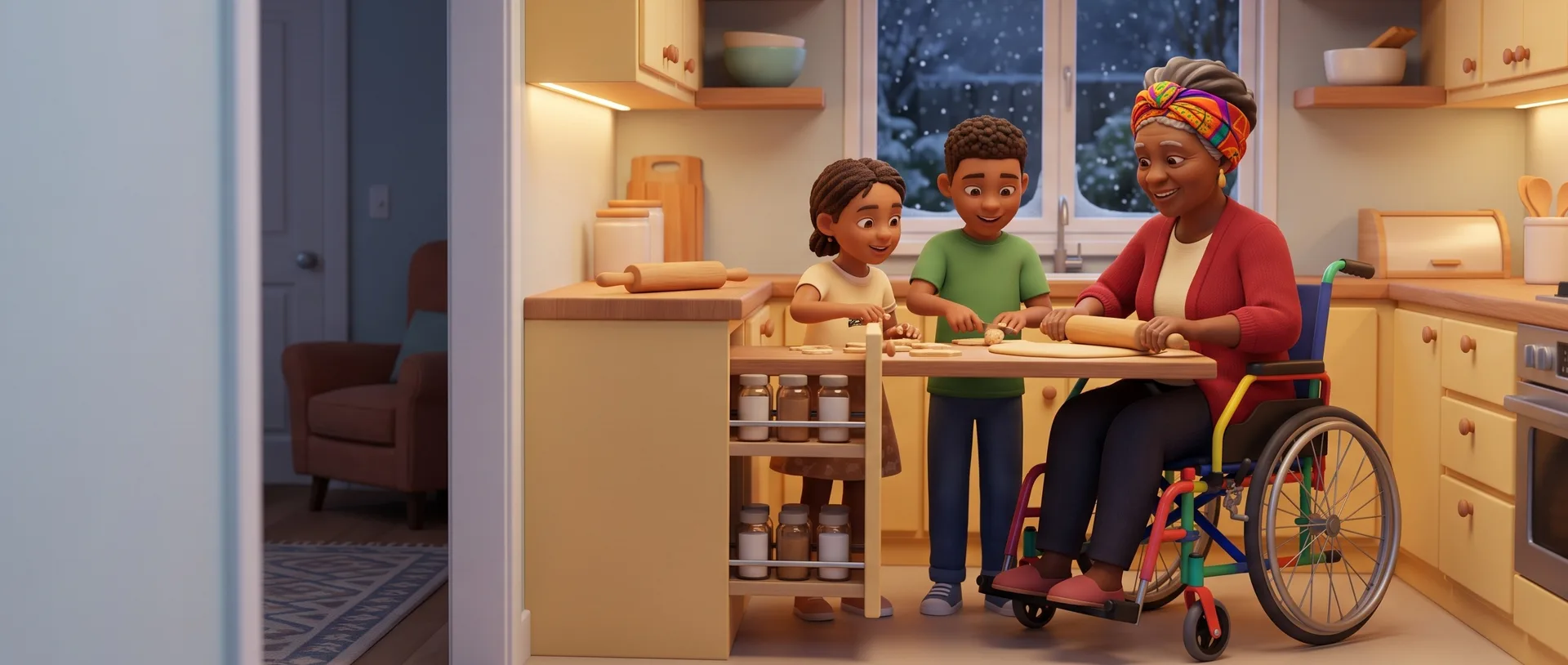
- Changes that can make a home easier to live inFrom where the saucepans live to a second banister, there is a wide range of changes people consider. Here is that range, and why the right ones are worked out with the person who lives there.
- Help with everyday tasks and getting out of the houseShopping, cleaning, appointments and the trip to see a friend all take some getting to. The kinds of help people and their families put together, and why getting out is about more than errands.
- Helping someone keep doing things for themselvesStepping in can feel like the kind thing to do. This guide is about doing everyday tasks alongside someone, at their pace, and knowing which questions belong with their care team.
- Keeping meals and daily routines feeling like theirsThe time breakfast goes on the table, the plate they always use, who sits where: the small rhythms of a day are part of a life. How families can help with meals and routines and leave them recognisably the person's own.
- Repairs and upkeep in someone's home, on their termsA home needs looking after, and it is still the home of the person who lives there. Repairs and everyday upkeep worked out with them, and who to ask about the parts a family cannot settle.
- Support in the community, and finding out what is localBeyond help in the home, public bodies describe community services such as shared or delivered meals, transport and social and learning groups. The kinds they describe, which public body can point to what runs nearby, and starting from what the person wants to keep doing in their area.
- What good care at home can look likeRespect, familiar faces, unhurried visits and clear lines of communication are what guidance in England and an Irish evidence review describe.
- What help at home can includeHelp at home covers more ground than the phrase suggests, from company and housework to personal care and nursing. Knowing the broad kinds can make a first conversation with a provider easier to follow.
- When help at home has just begunThe first visits have happened. What guidance says a person may be given in writing at the start, who they can ask with questions, and how, with the person, the arrangement can be adjusted and concerns raised.
- When help is needed through the night, or someone lives inPublic bodies describe help at home being arranged around agreed days and times. What to ask about how a night would run, making room for a worker who stays, and keeping the house the person's own.
- When someone's regular carer changesWhen a familiar carer leaves or is away, a routine can change. Ways to help the person you support through it, and what the two of you can ask the provider.
- Changes families often noticeA plain-language tour to give you words for what you are seeing, without telling you what any of it means. It is meant to help you bring a clearer picture to the person's own doctor or care team.
- Community and home nursing, and how it is arrangedPublic bodies describe nursing that can take place in a person's home or at a local clinic. What each one calls it, how a request for it can start where the person lives, and what to ask about the arrangements.
- Living alongside a long-term condition, and the care around itWHO describes care that looks beyond the disease to the whole person. What public bodies say about care shaped around a person's own preferences, who can be in the care team, how the care is joined up, and who to take questions to.
- Normal aging, or something more: why no page can answer thatIt is one of the first questions families ask, and one this page will not try to settle for you. It explains why, and how to put the question to the person's own doctor or care team instead.
- When eating or weight seems to be changingRather than tell you what it means, this page helps you describe what you have seen. It sets out what is useful to bring to the person's own doctor or care team.
- When getting around the home gets harderThis page will not say why moving has become harder or prescribe exercises or home fixes. It helps you bring a clear picture of what you have seen to the person's own doctor or care team.
- When memory or thinking seems differentThis page will not test anyone's memory or name what might lie behind a change. It helps you describe what you have seen and bring it to the person's own doctor or care team.
- A profile in the person's own words, for everyone who supports themA page a person fills in can set out how they communicate, what they like and the adjustments they need. Some bodies in England describe one for hospital stays, the hospital or health passport, and who each is written for; who else sees it is the person's to decide.
- Asking for information in a form that works for youLarge print, braille, audio, easy read, an interpreter or a phone call instead of a letter: information from a care or health service can come in more than one form. Asking for the one that works, for you or for someone you support, and who to ask.
- Equipment for daily living, and who assesses for itEquipment for dressing, eating or getting out of a chair or bed comes in many kinds, and which, if any, suits a person is worked out with them. Who can assess for it, how to ask, and why the choice stays the person's.
- Personal assistance, and the person who directs itIn some places, a disabled person can take on their own assistants and direct the help they give. What public bodies and others describe about personal assistance and self-managed attendant services, the person's part as the one in charge, and who to ask where they live.
- Nursing at home for a child, and fitting it around family lifeIn some places, registered nurses can help a family with a child's care at home. What some Canadian public bodies describe, where a request can start, and keeping the family's week and the child's own say in the plan.
- Short breaks for families of children with care needsA short break can be at home, in the community or overnight, and what is offered depends on what is available locally. What some public bodies and a children's hospital describe, who a family can ask, and the child's own routines, likes and views.
- Support for a child with additional needs in early learning and childcareIn some places, preschools and childcare programs can get support to include a child with additional needs. What some public bodies describe about that support, the setting's part in asking for it, and the child taking part in the room.
- Talking with a school about support for a childSchools in each place have their own ways of planning support for a child, and their own names for the plan. Who is part of it as public bodies describe them, how a family takes part, and where the child's own view fits.
- Who to contact if you are worried about a child's safetyWhere to report a concern about a child in parts of Canada and in Ireland, as each public body's own page sets it out, with its line or page. For a child in danger now, the page on urgent help.
- Day centres, and what a place there can offerWhat public bodies and a charity say day services can include, such as activities and a meal, how people come to them, and visiting before deciding.
- Going into hospital or a specialist unit, with the person's own ways keptA hospital ward is a setting of its own, with its own people and routines. What public bodies and organisations describe about who is who, bringing something of home, and helping the person's preferences travel with them.
- Questions to ask when choosing a care homeQuestions that public bodies and charities suggest asking on a visit to a care home, about meals, routines, belongings, visitors, the people who work there and how a concern is raised, for the person who would live there to weigh.
- Asking for someone's care to be looked at againThe help agreed at the start may stop fitting as things change. Who to ask, how the person whose care it is leads it, and where health questions go.
- Getting organized: documents, contacts, and accessWhen something comes up from a distance, it helps to know where the right information is. This page sets out what is worth gathering, with the person you support.
- Knowing when the carers will comeVisit times, who is coming and what happens when a time moves are worth getting clear with the person you support and the provider, so the family works from the same picture.
- Questions to ask a care provider about language, culture, faith and the way someone livesThe language someone speaks, the food they eat, their faith and how they like to be helped are part of who they are. Questions to put to a care provider, drawn from what some public bodies set out, for the person to use in any setting.
- Questions to ask when choosing a carer or agencyA first conversation with an agency can move quickly. Having the questions guidance suggests asking, about who comes, what it costs and what happens when plans change, can help you keep track of it.
- Taking what you hear from a distance to the people who can answer itMuch of what reaches you from far away comes second-hand. Sorting a question by who can answer it, keeping the person it concerns the one who raises it, and passing on what you heard as what you heard.
- The money conversation, and who takes part in itMoney can be hard to talk about with family. What public bodies say about these conversations, why they get put off, and where some places offer public money information and advice.
- Understanding someone's care plan, togetherA care plan sets out the help agreed with the person it is for. What one usually covers, how they shape it, and who else gets to read it.
- Weighing care options with the person and their health professionalsMore help at home, a different arrangement, a move: the options are wider than they first look. They are weighed together, with the person and the health professionals who know them.
- When a visit is late, missed or movedVisits do not always happen when planned. How to find out what happened, raise it with the provider, and keep the view of the person you support at the centre.
- Who the care provider talks to in your familyWhen several relatives want to hear from the provider, it helps to agree with the person you support who the provider talks to, about what, and how the rest of the family hears.
- Getting ready for a video or phone appointmentSome health services offer appointments by video or phone. What some health services and bodies describe about getting ready: a quiet place to talk, the questions the person wants to ask, and what happens if the call drops.
- Helping with someone's online health accounts, with their saySome health services describe a way for a person to let someone they trust help with their online health services. What public bodies say about the person's agreement, about not sharing passwords, and about how that access can be removed.
- Monitoring technology at home, on the person's own termsHome monitoring, personal response services and cameras are sometimes suggested for someone living at home. What public bodies describe about these kinds of technology, and the questions about consent, privacy and who responds, with the person deciding.
- Smart home technology, and staying in charge of your own homeLights, heating, blinds and more can be worked by voice or a switch. What disability, health and privacy bodies describe about these kinds of technology, who can advise, and the privacy questions worth asking first.
- Having an advocate: someone on the person's side, and where public bodies describe finding oneAn advocate can help a person express their views and wishes in decisions about their care. What public bodies describe an advocate doing, the public offices in some places that look at services for older people or help people speak up in health care, and the person staying in charge.
- Public and private help at home, and how they fit togetherPublic bodies in some places describe how the help they fund and help arranged privately sit together. What they say, and the questions a person can ask, with you alongside.
- Support public bodies describe for the family member who does the caringSome public bodies describe payments, grants, tax measures or leave for people who care for a relative. What they say exists, and which body to ask about what applies to you.
- What a care needs assessment is, and the person's part in itWhen someone asks a public body for help at home, the body usually assesses what they need. What the bodies say an assessment is for, how the person takes part, and what some of them say follows it.
- What public funding for help at home can cover, and where it stopsPublicly funded help at home usually follows an assessment of need, and some help may sit outside it. What public bodies say their funded help can include, what may not be provided, and who decides what is offered.
- When you disagree with a decision: reviews, complaints and who can helpA decision about someone's help at home may not be what they asked for. What the bodies describe for having a decision reviewed or making a complaint, and the other offices that take some complaints, with the person leading.
- Where to start when someone may need help at homeWhere the public route to help at home begins depends on where the person lives. What public bodies say about where it starts, who can start it with them, and what may be asked at the first contact.
- A care worker's part in someone's care, and where it hands overFor care professionalsA care worker's role has edges, and some public bodies set them out. What competency profiles and standards for care workers describe about working from the care plan, the person's own say, and passing on what belongs with someone else.
- Finding people who understand what you're going throughWhen friends don't quite get what caring involves, it can help to talk with people who do. Here are the kinds of support that exist, what people say they get from them, and how to find what is near you.
- Guilt, resentment and mixed feelings about caring for someoneCaring for someone can stir up feelings you would rather not admit to, sometimes several at once. Here is what carers' and health organisations say about them, and some ways to give them room.
- How to bring it up without a fightRaising a worry with someone close to you can be hard to start. This page looks at opening it gently, listening as much as talking, and expecting more than one conversation.
- How to check in without hoveringStaying in touch reassures you, and how it lands for the person you're checking in on matters too. Finding a rhythm that works for both of you is the art of it.
- Keeping someone's privacy when you help at homeHelping in someone else's home means being in their space, their cupboards and their day. Ways to give help that keeps their privacy, and their say, intact.
- Keeping your own life, work and relationships while you careCaring for someone can spread into your job, your household and your own plans. These are ways carers talk to employers, bring the household in, and keep something for themselves.
- Loneliness, being alone and staying connected in later lifeLiving alone and feeling lonely are not the same thing, and a full diary doesn't settle either. What health bodies and charities say about the difference, and how families can support connection without running it.
- Making the most of visitsWhen visits are rare they carry weight, and it's easy to turn them into a to-do list or a quiet inspection. This page keeps time together at the centre.
- Respecting their independence and choicesCaring for someone can quietly slide into managing them. This page looks at supporting a person to run their own life, including choices you would not make.
- Setting up a support network from a distanceWhen you can't be there in person, a few people near the person you support can be present in ways you can't. This page looks at building that circle with them, starting from who is already there.
- Sharing the load with siblings and familyCare tends to fall unevenly: one person becomes the default. This page looks at naming the work so the whole family can share it.
- Talking with someone whose memory is changingWhen someone's memory is changing, conversation itself can start to feel different. This page passes on everyday ways of talking that organisations supporting families suggest, without saying what lies behind any change.
- When someone refuses helpWhen someone you are worried about says 'I'm fine, I don't need help', this page looks at what can sit behind a no, and how to keep the conversation open.
- When you start receiving care: your say from the first visitWhen care begins, at home or somewhere new, there is a lot you may be asked and a lot you can ask. What public bodies describe about your part from the start: how your days run, which service comes, and how to ask for another look.
- Worn down by caring for someoneWhen caring leaves you tired and stretched thin, it can help to have words for it. This page gathers how health and carers' organisations describe it, and points you to your own doctor.
- Care records every carer can pick upFor care professionalsWhen each carer writes visit notes differently, the next carer has less to go on. Ways services agree what goes in a record, keep it in the person's home where everyone involved can see it, and keep the person able to read it.
- Keeping families informed, with the person's sayFor care professionalsMany families want to hear about visits and changes, and the person receiving care decides what is shared. How services agree that with each person, write it into the plan and look at it again.
- Keeping the same carers with the same peopleFor care professionalsGuidance on home care puts weight on continuity of carers. How services build rotas around familiar faces, and what to do when a regular carer is away.
- Planning for missed and late visitsFor care professionalsMissed and late visits are worth planning for. Practical ways services keep a planned rota, set up back-up plans and keep the person informed when a visit moves.
- Planning visit routes across an areaFor care professionalsTravel between visits is part of planning a day of home care. Ways to build travel time into the plan, keep the person's preferred times at the centre, and be open with staff about how route information is used.
- Keeping a record of each visit against what was agreedFor care professionalsWhat guidance from Canada, Ireland and England says about recording each visit promptly and against the person's plan, the person's right to make their own decisions, including refusing a service, and telling care workers openly how information about their visits is used.
- Looking at each person's week as a wholeFor care professionalsReading one person's visits as a whole week, against what was agreed with them. What guidance says about agreeing visit times with the person, timing visits around their day, and talking through any change to when visits are made.
- Booking visits that need two care workersFor care professionalsWays a service can coordinate a visit that needs two care workers, arrange cover in advance and keep the visit record accurate. Whether a visit needs two workers, and how it is carried out, is for the service to decide.
- Writing care plan tasks a care worker can follow, in the person's own wayFor care professionalsWays to write care plan tasks clearly enough to follow, with the person's own priorities, routines and preferences in them, and with the person taking part in shaping the plan. Who writes the plan differs by where a service operates.
- Who on your staff needs which part of a person's recordFor care professionalsAccess to a person's record that follows the work each person on the staff does, looked at again when someone joins, moves or leaves. What privacy guidance describes, including explaining to the person how their information is used.
- Supporting new care workers through their first shiftsFor care professionalsWhat guidance says about the start of a new care worker's time with a service: working alongside a colleague before working alone, introducing themselves to the people they support, and knowing who to ask for support, including out of hours.
- Hearing complaints and concerns, and learning from themFor care professionalsAn ombudsman office describes complaints as feedback on how an organisation is doing. What ombudsman offices, regulators and health bodies describe about receiving concerns openly, answering them, and using what they show.
- Involving residents and families in how a care home runsFor care professionalsResidents, and the people close to them, can have a part in decisions about the home they live in or visit. Ways regulators, governments and resident and family organisations describe hearing them, from meetings to everyday feedback, and acting on what they say.
- Nursing alongside home care teams, with the person at the centreFor care professionalsWhen nurses and home care workers support the same person, each needs to know where the other's part begins and ends. What nursing regulators and public bodies describe about working from one plan, passing information between teams, and keeping the person at the centre.
- Working alongside the person and the supports they already haveFor care professionalsA disability support organisation is seldom the only support in someone's life. What public bodies describe about planning that starts with the person, working with the family, friends and community around them, and supporting the person's own choices.
- How to reach urgent help, wherever you areIn a moment when it is hard to think clearly, this page is here so you know where to look. It sets out how to reach urgent help in each place it covers.
- AI in health and care, and the questions worth asking about itSome health services describe using artificial intelligence, for example to help with notes. What public bodies say about its uses, about keeping people responsible for care decisions, and the questions a person can ask.Family and consentTechnology
- Between hospital and home: what transitional and intermediate care can beAfter an illness or a hospital stay, some people spend a short while in a care setting, or have short-term help at home. What public bodies in some places call these arrangements, how they describe them, and the person's own part in what comes next.Providers and the systemCare homes
- Care quality, and why the person's own view sits at the centre of itSeveral public bodies that set out what quality in care means describe it in a handful of broad ideas, and the person receiving care is written into each description. What those descriptions include, and where the person's own voice fits.Providers and the systemManaging care
- Care settings designed with people living with dementia in mindSome care homes and units are set up with people living with dementia in mind. What public bodies and dementia organisations describe about how such places can be designed and run, and the person's own life and routines within them.Family and consentCare homes
- Care stories, and how to read and share themStories about care turn up in advertising and on social media. What advertising and consumer bodies say about testimonials, what one story can and cannot show, what privacy bodies say about sharing a story that involves someone else, and where a concern about an advert can go.Family and consentPeople and wellbeing
- Health advice routes in the care system where someone livesCare teams are not always open. The health advice lines public bodies describe, whose own pages give their hours, who in the usual system takes questions about the care afterwards, and the separate page for emergencies.Urgent helpHealth
- How specialist care at home is arranged around a personWhen someone with complex needs is cared for at home, several services can be involved. How public bodies describe that care being assessed, planned and arranged, the coordinator or case manager some of them name, and the person's own say in it.Providers and the systemCare at home
- Intellectual disability, learning disability, and why the words differ by placeThe same words can point to different people in different places, and bodies in Canada, Ireland and England do not all use the same ones. Which terms some of them use, why 'learning disability' can carry more than one meaning, and why the language of the people described comes first.Providers and the systemDisability
- Keeping a person's say at the centre when their memory is changingFor care professionalsGuidance for care services describes involving a person whose memory is changing in decisions about their own care. What it says about their say, their own words, and bringing family in on their terms.MemoryFor care professionals
- Mental health services, and the routes into themSupport for mental health is reached in different ways from place to place. What public bodies describe about where it can start, the kinds of services they name, the person's own say, and where to turn in a crisis.Providers and the systemHealth
- Neurodiversity, and support shaped by the autistic personPeople on the autism spectrum use many different terms for themselves, and the bodies that write about autism do not all use the same words. What community and public bodies say about neurodiversity, language and support, and why the person's own way of describing themselves leads.Family and consentDisability
- Nursing homes, and how health care is arranged in themSome care homes provide nursing care as part of what they offer. How public bodies describe that kind of home, the professionals a person may see there, and the person's own say in their health care.Providers and the systemCare homes
- Palliative care, where it is given, and the person's wishesHealth bodies describe palliative care as care for people living with a serious illness, and support for those close to them. Where it can be given, who can provide it, and how a person's own wishes about their care can be heard.Family and consentHealth
- Paying for a care home place: the public schemes, and who runs themIn some places a public scheme helps with the cost of a care home place, and in others government sets the charge, or the most it can be. The schemes and charges public bodies describe, which body runs each one, and why what applies to one person is for that body to say.Money and paperworkSystems and rights
- Standards, inspection and accreditation: how care services are checkedStandards, registration, inspection and accreditation are different kinds of check, held by different bodies. What public bodies in some places describe about each, and what any of it leaves to the person receiving care.Providers and the systemSystems and rights
- Support after a brain injury, and the person's own goals within itSupport after an acquired brain injury can carry on at home and in the community. What some public bodies and brain injury non-profits describe about that support, the person's own goals within it, and the family's part.Providers and the systemDisability
- What a care law sets up, and what it does not decide about one personLaws about care can create public bodies, place duties on services and set the terms and standards services work within. Some of the laws public bodies in each place name, what those bodies say the laws set up, and why what applies to one person is for the body where they live to say.Providers and the systemSystems and rights
- What a medication review is, and how to ask for oneSome public bodies describe a medication review as a one-to-one meeting with a pharmacist about the medicines a person takes. Who can answer questions about medicines, how a review can be asked for, and where the sources stop.Providers and the systemHealth
- What assisted living can mean, and why the name changes from place to placeHousing with some services in the building goes by different names in different places, and is overseen differently in each. How public bodies describe it where they are, and why the choice stays with the person who would live there.Providers and the systemCare homes
- What care management software is, and whose information it holdsCare records can be kept on paper, in software, or in a mix of the two. What public bodies and privacy regulators describe about these systems, what they can hold, and the person's say over the information about them.Providers and the systemTechnology
- What fostering involves, and where to start askingPublic bodies describe fostering as caring for a child in your home for a time, working alongside the child's family, social worker and others. What the role can involve as they describe it, kinship care, the child's own voice, and where to start asking.Providers and the systemChildren and families
- What people receiving care say matters to themSome public bodies have asked people who receive care, and older people, about their lives and the help that comes to them. What their published reports describe, and why none of it speaks for any one person.Family and consentPeople and wellbeing
- What public bodies say about paying for changes to a homeSome public bodies describe help with the cost of changes to a home, each on its own terms. What they say exists, who decides, and why the home and the choice stay the person's.The homeSystems and rights
- What public bodies say about the future of digital careGovernments and health services publish plans for digital technology in health and care. What some of those plans say they aim for, read as aims rather than forecasts, and what they say about the people care is for.Providers and the systemTechnology
- What rehabilitation is, and who provides itWHO describes rehabilitation as a health service for people whose functioning has declined through illness, injury, surgery, disability or age. What health bodies say it is, the professionals who can provide it, and the places it can happen.Providers and the systemHealth
- When people are asked about their care, and what they sayIn some places, public bodies ask people receiving care, and those close to them, about their experience of it. Who runs these surveys, what they ask about, the themes their published reports describe, and how to read them.Providers and the systemPeople and wellbeing
- Why care is arranged differently from one country to the nextInternational bodies describe care work as paid and unpaid, public and private, with families often part of it. What those bodies describe, how public bodies in Canada, Ireland and Thailand describe their own arrangements, and why one place's account is no guide, on its own, to another.Providers and the systemSystems and rights
- Working in care, as public surveys and reports describe itPublic bodies and an international organisation have published reports on care work, and one national survey asked health care workers about their experiences at work. What these sources describe about the job, the people at its centre and the pressures on it, without speaking for any one worker.Providers and the systemPeople and wellbeing
- Moving from children's to adult servicesServices for children and services for adults are often organised separately, and the move between them can take planning. What public and professional bodies describe about that move, the young person's growing say in it, and questions to ask along the way.Providers and the systemChildren and families
- Technology that can help with communication and everyday accessFrom captioning to communication aids, assistive technology covers a wide range. What health and professional bodies describe, who can advise, and the say of the person who will use it.Family and consentTechnology
- The team around a child with care needsCare for a child with complex needs can involve several kinds of professional. What some public and professional bodies describe about who can be on a team, how a team works with the family, and including the child in decisions as they grow.Family and consentChildren and families
- What a care home is, and what everyday life there can includeHow public bodies describe residential care, and what they say about belongings, daily routines, visitors and the person's own say in each.Family and consentCare homes
- What supported living is, and who shapes itSupported living can mean a home of one's own, with support arranged around the person who lives there. How public bodies and others in social care describe it, the person's say over where, how and with whom they live, and questions to put to whoever arranges it.Family and consentDisability
- Keeping up with someone's life from far away, and whose news it is to shareWhat Irish guidance and an Ontario home care organisation say about asking a person's consent before their information is shared, and a UK charity's view that newer forms of help for older people should not be seen as a substitute for human contact.Family and consentPeople and wellbeing
- Who a person names as next of kin, and what that does not meanInformation from Ireland and England describes next of kin as someone a person chooses, who need not be a relative. What being named should mean, and why it is not the same as deciding for them.Family and consentPeople and wellbeing
- Before anything new comes into someone's home, whose decision it isWhatever is being suggested, the starting point is the person's say. How families can raise it, listen, and leave the decision where it belongs.Family and consentPeople and wellbeing
- How information moves between hospital and home careWhen someone comes home from hospital, information has to travel with them. What guidance in some places says should be passed on, and to whom, and what you and the person can ask before and after discharge.Providers and the systemHealth
- What checks a carer may go throughBefore a paid carer comes to the door, an agency may check a few things. The kinds of checks that exist, and how you and the person you support can ask about them.Providers and the systemManaging care
- What you can ask about someone's care recordsWhat home care guidance and privacy regulators in some places say about a person's care records, including asking to see what is held and to have it corrected. What you and the person can ask, and who to ask.Providers and the systemSystems and rights
- Why home care visits are the length they areA visit can feel short from the outside. How visit lengths are usually set, what shapes them, and what you and the person you support can ask if the time does not fit.Providers and the systemCare at home
- A grab rail and the life it is there forA change at home is about what the person wants to keep doing there, and it is worked out with them, sometimes alongside an occupational therapist.Moving aroundCare at home
- Decisions about a person, made with themNICE guidance in England asks adult social care professionals to involve the person in every decision about them, and to ask who else they want involved.Family and consentPeople and wellbeing
- Knowing where the important papers areOne known place for the papers that matter, kept with the person's agreement. What goes in is theirs to decide.Money and paperworkManaging care
- Meeting the carer before the care beginsWhen home care starts, NICE guidance in England says new care workers should be introduced to the person before they visit on their own. Why guidance there treats familiar faces as part of good care.Providers and the systemCare at home
- The one who lives nearestThis piece is for the person care has come to rest on, who in the US, the National Institute on Aging says, tends to be a spouse or the older person's child or sibling who lives closest.Family and consentPeople and wellbeing
- The shape of a day belongs to the person living itToast at the counter, lunch at one, a neighbour with a cake tin on Thursdays. A look at meals as company and habit, and at who decides how a day runs.Eating and routineCare at home
- Why loneliness is hard to see from the outsideA week can sound full from across the table. How it felt is a question only the person who lived it can answer.Staying connectedPeople and wellbeing


































































































































How we source
Carefulness, made visible.
Named, not counted
Each piece names its sources and tags each one Primary or Secondary. It never counts sources at you.
Under-claiming on purpose
Where no authority sets a threshold, we say so rather than inventing one.
Naming the limit
Every piece names where its authority ends, and who to ask instead.