
Living well
Keeping a parent's privacy when you help at home
Helping in someone else's home means being in their space, their cupboards and their day. Ways to give help that keeps your parent's privacy, and their say, intact.

You let yourself in with the spare key, call hello down the hall and start putting the shopping away. There are letters on the side and a diary open on the table, all of it easy to glance at. Helping a parent at home means being inside their space in a way you may not have been for years. This page sets no limit on how much help is too much: that line is your parent's to draw, with their care team where it needs one. What follows is information rather than medical advice.
Understand the worry about being a burden
In Age UK's 2018 qualitative study in England of older people who were struggling to cope, feeling a burden on others was one of the things people described. The same small 2018 study in England, of people struggling to cope, found there is a risk that help, particularly from adult children, can deepen an older person's sense of being a burden. People in that 2018 England research also spoke of reluctance to ask for or accept help, linked to not wanting to admit a problem, to shame or resignation or perhaps pride, and to wanting to keep their independence. That study was small and focused on people in hard circumstances, not older people in general. Even so, in that same 2018 research in England, family, friends and neighbours were clearly a lifeline for many of the people interviewed.
What we don’t claim here
We don’t tell you whether a change is serious, or where ordinary ends and concerning begins. No authority sets that threshold, so we don’t imply one.
Who can weigh it: your parent’s doctor or care team, who know the person and the situation. Where to take it →
Ask before you help
SCIE says everyone has the right to make choices about how they live and how their support is given, and that supporting dignity involves recognising a person's equal right to freedom, choice and control over their life. HIQA, Ireland's health quality authority, and Safeguarding Ireland say in their joint guidance that people using health and social care services should know they can give or withhold consent freely, without pressure. At home, that can be as simple as asking whether they'd like a hand with the post before opening it.
Work it out together
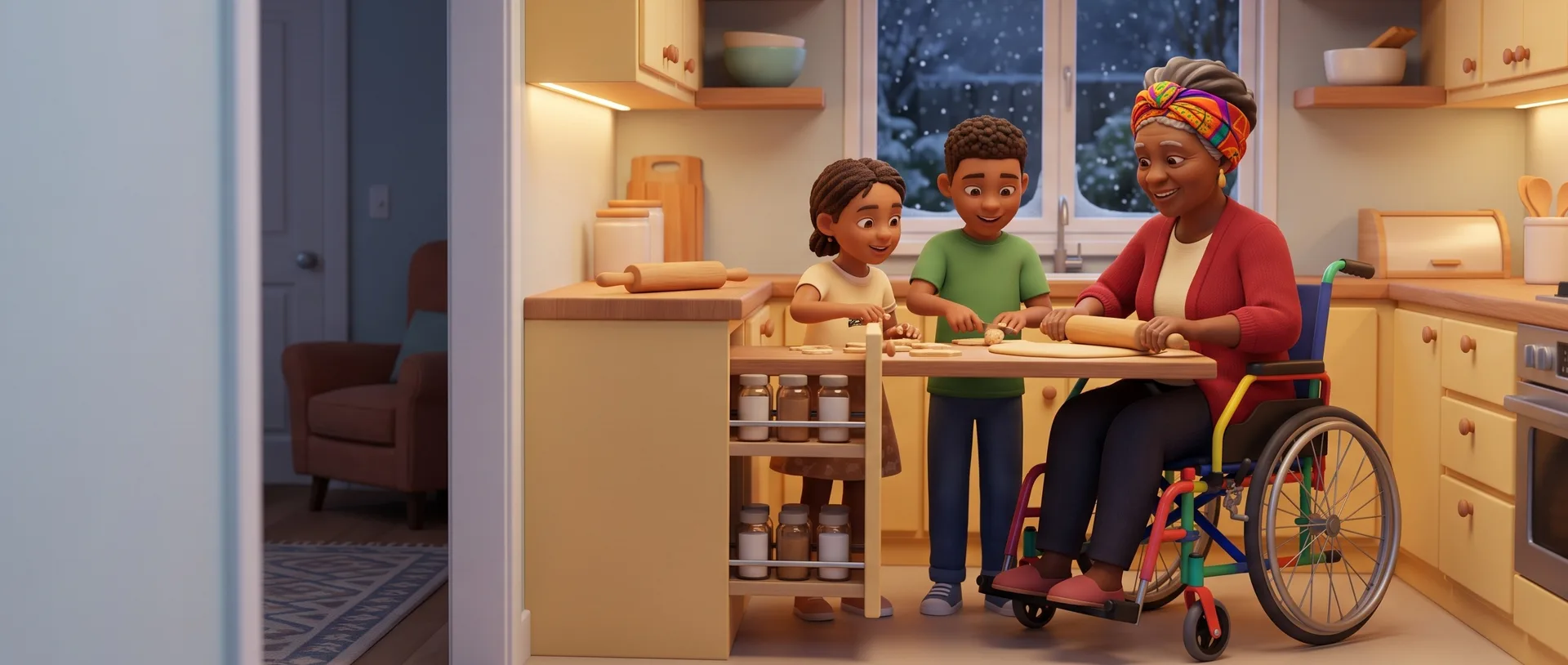
SCIE's reablement guide puts the person's own views at the centre, with family included as appropriate. In the NHS's account of a home assessment in England, set out more fully in Changes that can make a parent's home easier to live in, the person and the professional work out together what is needed. Helping in a kitchen can follow the same pattern: saying what you are about to do, and why, gives your parent the chance to say yes, no or not like that.
Treat their home as their own
SCIE describes privacy, the right to keep important parts of yourself to yourself, as central to dignified care. SCIE adds that privacy matters for personal space as well as personal care, and that the small things count: people don't want their private space invaded. SCIE says the right to privacy includes being alone, being quiet and having feelings that are not necessarily explained, and that what a person chooses to keep private must be respected; Loneliness, being alone and staying connected in later life comes at being alone from another side. Article 12 of the Universal Declaration of Human Rights says no one should be subjected to arbitrary interference with their privacy, family, home or correspondence. Reading its spirit into the help a family gives at home is this publication's own view, not the declaration's.
Keep them in charge
HIQA and Safeguarding Ireland describe autonomy as a person directing how they live each day according to their own values, beliefs and preferences. HIQA's guidance for health and social care services says people may need different levels of support to make their own decisions, and that staff have a key part in giving it. Whether a parent is able to make a particular decision for themselves is not something a family is asked to settle on its own; where that is in question, it is for their doctor or care team, and the formal side differs by where your parent lives.
Share the bigger questions with their care team
Questions about how their privacy sits alongside their care are worth taking to their doctor or care team, ideally with your parent in the conversation. When the help itself is being turned down, When a parent refuses help looks at that separately.
When to ask a professional
This guide stops where a professional’s judgment starts. Bring what you’ve noticed, plainly, to your parent’s doctor or care team.
Sources
The outside sources this guide draws on.
Primary: Taken from the official source itself, and cited directly. Secondary: Established in recognised guidance, summarised here.
- PrimaryAge UK, Struggling to cope with later life: Qualitative research on growing older in challenging circumstances, 2018
- SecondarySCIE (UK), Privacy and dignity in care, no date given
- SecondarySCIE (UK), Freedom to choose and dignity in care, no date given
- PrimaryHIQA and Safeguarding Ireland, Guidance on a Human Rights-based Approach in Health and Social Care Services, 2019
- SecondarySCIE (UK), Reablement: a guide for carers and family, updated 2020
- PrimaryUniversal Declaration of Human Rights, Article 12, as reproduced by the Council of Europe, 1948
- PrimaryNHS (England), Home adaptations, reviewed 2025
Articles from this department
More in this department


How we source
Carefulness, made visible.
Named, not counted
Each guide names its sources and tags each one Primary or Secondary. It never counts sources at you.
Holding back
Where a part isn’t confirmed, a guide runs shorter and says what is missing.
Naming the limit
Every guide names where its authority ends, and who to ask instead.