
The conversation
When a parent refuses help
When a parent you are worried about says 'I'm fine, I don't need help', this page looks at what can sit behind a no, and how to keep the conversation open.
Ask a professional about this one
What helps here is very particular to the person. This is genuinely one to take to the people who know your parent’s situation.
Where this guide stands
- PrimaryTaken from the official source itself, and cited directly.
- SecondaryEstablished in recognised guidance, summarised here.
- SecondaryEstablished in recognised guidance, summarised here.
- SecondaryEstablished in recognised guidance, summarised here.
Because part of this is held, the guide runs short and leans on where to ask rather than on what we can establish.
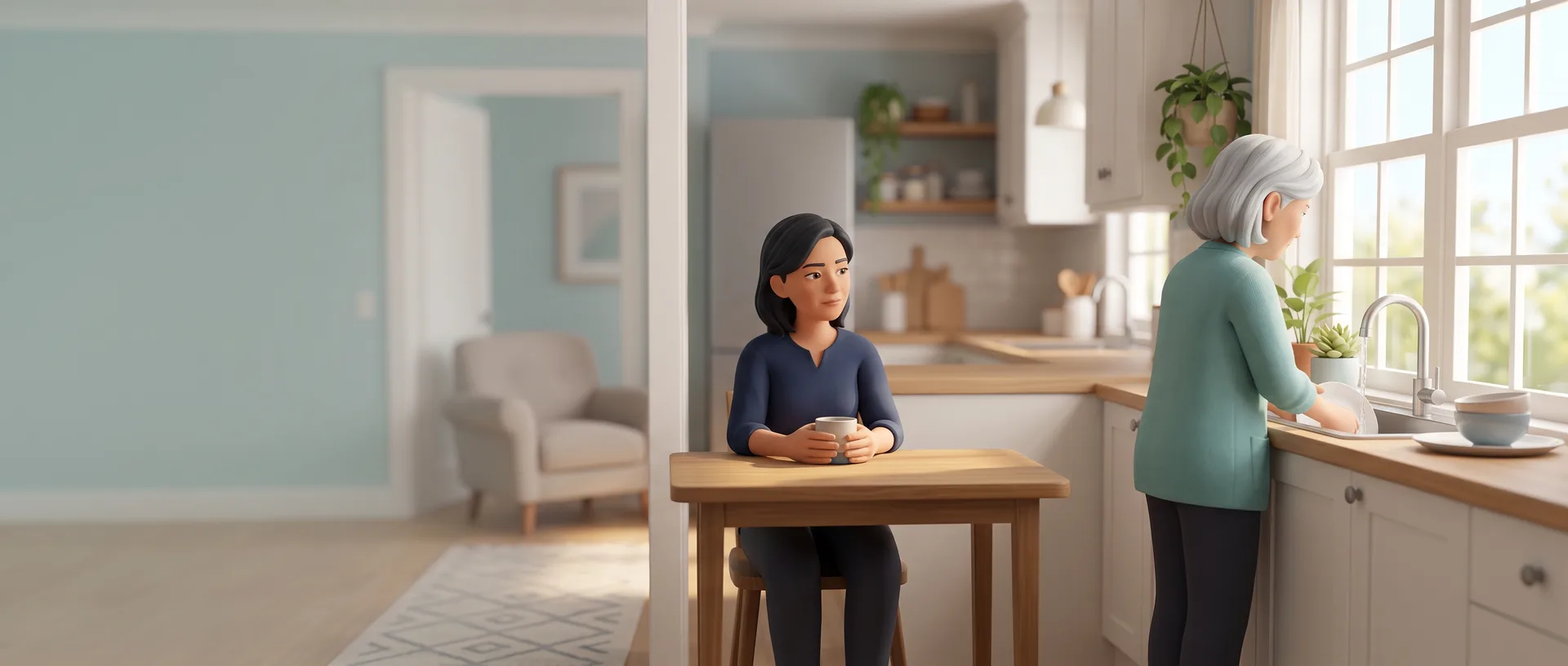
"I'm managing," your mum says on the phone, and the talk moves on to the neighbour's new fence. The leaflet you left on the hall table last visit has gone into the recycling. Both are a parent turning help down. What follows is information, not medical advice, and it won't tell you how to change their mind. It looks instead at reasons a no can have, and at ways to keep talking.
What we don’t claim here
What follows is general framing that families often find helpful. It is not guidance for any particular condition, it does not tell you what a change means, and it is not tailored to your parent.
Who can weigh it: your parent’s doctor or care team, who know the person and the situation. Where to take it →
Look for the reasons behind the no
The US Family Caregiver Alliance notes that someone who needs help may see a service as an invasion of their privacy, a loss of independence or a waste of money. It adds that many adults resist having strangers come into their home. The UK charity Age UK, on its page for worried families, says it's understandable that someone might be defensive or try to minimise the problem, that it may be a matter of pride, or that they might simply see things differently from you.
Hear what the research heard
In 2018 qualitative research in the UK with older people in challenging circumstances, the UK charity Age UK found a reluctance among them to ask for or accept help, which it linked to not wanting to admit to a problem out of shame, resignation or perhaps pride, and to wanting to stay independent. The same 2018 UK research noted a risk that help and support, especially from adult children, can heighten an older person's sense of being a burden. That is one reason this page starts from your parent's view rather than from the help on offer. In that 2018 UK research, family members often found these issues hard to raise, and when they did, could be puzzled and frustrated by a relative's refusal to accept help.
Listen as much as you talk
Age UK, the UK charity, says one of the main lessons from its research was the importance of listening as well as talking, and that more open conversations might help people reach decisions that felt right to them. How to bring it up without a fight has more on opening that kind of conversation.
Offer something small they can say no to
The US Family Caregiver Alliance suggests bringing new help into a family member's life gradually, with an in-home care aide for only a couple of hours each week as one example. An offer that size still leaves your parent a real no, and keeps the say with them.
Leave the decision in their hands
Age UK, the UK charity, says in its 2018 research briefing that it is important to make sure people feel in control of a decision to make a change and accept help. Its page for families puts it more simply: however much we care about someone, what they do with their life has to be their choice. The US Family Caregiver Alliance says you cannot pressure a family member into doing things they are not ready or willing to do. Respecting their independence and choices looks at that side more fully.
Bring in their doctor or care team
Worries about their health or safety that sit behind a refused offer belong with their doctor or care team. Whether a parent is able to make a particular decision for themselves is not something a family is asked to settle on its own; where that is in question, it is for their doctor or care team, and the formal side differs by where your parent lives. Whether you are part of their conversations with their doctor is your parent's to decide. Anything that cannot wait is a different matter: How to reach urgent help, wherever you are sets out how to reach help.
When to ask a professional
This guide stops early on purpose. The people who know your parent’s situation are the ones to ask about anything specific to them: what is happening, what it means, and what helps them in particular.
Sources
The outside sources this guide draws on.
Primary: Taken from the official source itself, and cited directly. Secondary: Established in recognised guidance, summarised here.
- SecondaryFamily Caregiver Alliance (US), How can I get my family member to accept help?, no date given
- PrimaryAge UK, Struggling to cope with later life: Qualitative research on growing older in challenging circumstances, 2018
- SecondaryAge UK, Worried about an elderly person: what to do and who to contact, updated 2026
- SecondaryAge UK, Difficult conversations in later life, updated 2023
Articles from this department
More in this department



How we source
Carefulness, made visible.
Named, not counted
Each guide names its sources and tags each one Primary or Secondary. It never counts sources at you.
Holding back
Where a part isn’t confirmed, a guide runs shorter and says what is missing.
Naming the limit
Every guide names where its authority ends, and who to ask instead.