
Living well
Helping a parent keep doing things for themselves
Stepping in can feel like the kind thing to do. This guide is about doing everyday tasks alongside a parent, at their pace, and knowing which questions belong with their care team.

Your mother is peeling potatoes, slowly, with the knife you would never have picked, and your hands are already reaching to take over. This guide is about that moment: helping a parent go on doing the ordinary things in their day without the help quietly taking those things away. This is general information, not medical advice. Whether any particular task is right for your parent is a call this guide leaves, deliberately, to their doctor or care team.
Remember what the doing is for
WHO describes healthy ageing as building and keeping the functional ability that makes wellbeing possible in later life. In WHO's terms, functional ability is about having what a person needs to be, and to do, the things they have reason to value. Among the abilities WHO includes are meeting basic needs, learning and making decisions, getting around, keeping relationships going and contributing to society. The UN Principles for Older Persons, adopted in 1991, hold that older people should be able to live at home for as long as possible. Seen that way, making the tea or sorting the post can be part of a life, not only a chore to lift off someone's hands, and Keeping meals and daily routines feeling like theirs looks at the shape of that day.
What we don’t claim here
We don’t tell you whether a change is serious, or where ordinary ends and concerning begins. No authority sets that threshold, so we don’t imply one.
Who can weigh it: your parent’s doctor or care team, who know the person and the situation. Where to take it →
Do it with them, not for them
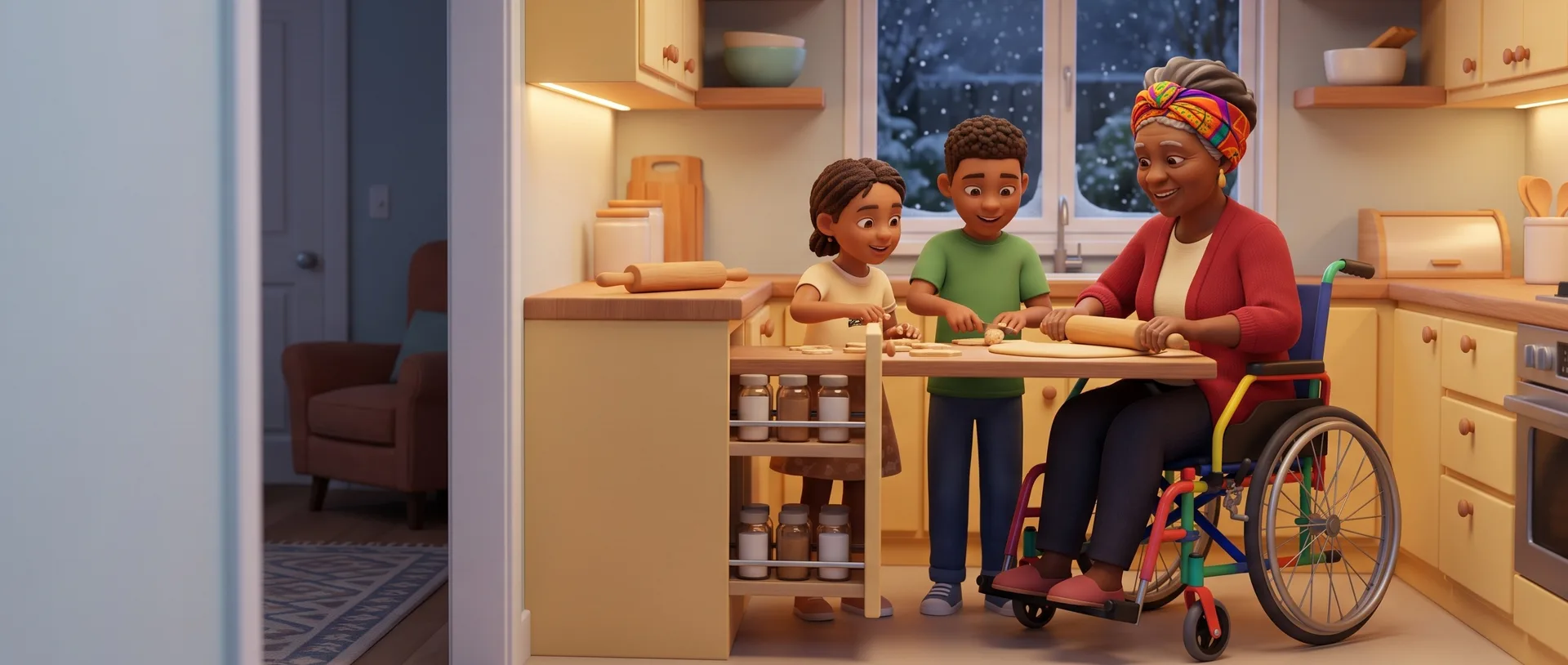
SCIE, describing an approach called reablement, sets "doing with" against the "doing for" that it says traditional home care tends towards. Reablement, in SCIE's account, aims to help people carry on living the way they want to. SCIE's guidance for care staff makes a similar point, that people should be supported to do things themselves rather than have them done for them. NICE's 2015 guideline on home care for older people in England says those services should promote independence and support people to do the things that matter to them. SCIE's reablement guide also notes that giving more support than someone needs can leave them more reliant on others. You carry the bag; they choose what goes in it.
Let some things take longer, or go differently
SCIE is candid that this way of working can at times be hard, both for the person wrestling with a task and for whoever is looking on. In describing reablement, it notes that when a carer or support worker steps in to save time, or because of their own feelings, it can end up as a setback for the person. A bed made with the corners tucked a different way is still a made bed. In reablement, SCIE says, positive encouragement can be the more helpful thing over the long term.
Start from what they can do
Reablement, as SCIE describes it, builds on a person's strengths, with the aim of promoting independence and wellbeing as far as it can. Asking which parts of a job your parent wants a hand with, and which they would rather keep, leaves the deciding with them, a thread Keeping a parent's privacy when you help at home picks up for help inside the home.
Hand the safety questions to the people trained for them
Questions about whether a task is still safe for your parent are worth taking to their doctor or care team rather than settling at the kitchen table. Whether a parent is able to make a particular decision for themselves is not something a family is asked to settle on its own; where that is in question, it is for their doctor or care team, and the formal side differs by where your parent lives. Ireland's association of occupational therapists says these professionals help people with the everyday activities they want and need to do when facing illness, injury, disability or hard life events. The same association describes them as experts in assessing how health conditions can affect a person's abilities, and in helping people overcome or work around difficulties in their daily activities and roles. One Irish public community service describes its aim as helping people have as much independence and quality of life as possible. Their care team is the place to ask how to reach an occupational therapist.
If something happens that can't wait, see How to reach urgent help, wherever you are.
When to ask a professional
This guide stops where a professional’s judgment starts. Bring what you’ve noticed, plainly, to your parent’s doctor or care team.
Sources
The outside sources this guide draws on.
Primary: Taken from the official source itself, and cited directly. Secondary: Established in recognised guidance, summarised here.
- PrimaryWorld Health Organization, country office for the Philippines, Healthy ageing and functional ability (questions and answers), 2020
- PrimaryUnited Nations, Principles for Older Persons (General Assembly resolution 46/91), 1991
- PrimaryNICE (England), Home care: delivering personal care and practical support to older people living in their own homes (NG21), 2015
- SecondarySCIE (UK), Reablement: a guide for carers and family, updated 2020
- SecondarySCIE (UK), Freedom to choose and dignity in care, no date given
- PrimaryAssociation of Occupational Therapists of Ireland, What Is OT, no date given
- PrimaryHSE (Ireland), Mayo community occupational therapy service (adults), no date given
Articles from this department
More in this department


How we source
Carefulness, made visible.
Named, not counted
Each guide names its sources and tags each one Primary or Secondary. It never counts sources at you.
Holding back
Where a part isn’t confirmed, a guide runs shorter and says what is missing.
Naming the limit
Every guide names where its authority ends, and who to ask instead.