
Living well
Keeping meals and daily routines feeling like theirs
The time breakfast goes on the table, the plate they always use, who sits where: the small rhythms of a day are part of a life. How families can help with meals and routines and leave them recognisably your parent's own.

Porridge at seven, the back door open to the garden, the crossword folded to the right page and left by the teapot for later. Every household has its own clock, and your parent's has been running for decades. When you start helping with meals or the shape of the day, it is easy for that clock to drift towards yours without anyone meaning it to. This guide is about helping in a way that keeps the day theirs. It is information, not medical advice. It says nothing about what your parent should eat, how much, or what a change in their appetite might mean; those questions sit with their care team.
Respect the shape of the day
The California Department of Aging, in the United States, says routines can play an important part in helping people stay active and engaged as they get older. It points to simple ones, a morning walk, a trip to the library, a regular call with a friend, as things that can give a week structure and something to look forward to. The same page notes that purpose doesn't have to mean being busy all the time, and that it often comes from routines that bring enjoyment, responsibility and a sense of contributing. Before changing the order of a day, it can help to learn what that order is and why it matters to them.
What we don’t claim here
We don’t tell you whether a change is serious, or where ordinary ends and concerning begins. No authority sets that threshold, so we don’t imply one.
Who can weigh it: your parent’s doctor or care team, who know the person and the situation. Where to take it →
Treat a meal as more than food
Fraser Health in Canada observes that eating alone is often not as enjoyable as eating with others, and that many older adults end up eating alone after retirement, the loss of a spouse or a quieter social life. Australia's aged-care quality regulator says eating the foods you enjoy is an important part of quality of life. In research on residential care, the UK Dignity in Care campaign notes, mealtimes come up again and again as a moment that can either respect a person's dignity or undermine it.
Leave the choices where they belong
SCIE describes autonomy as making your own decisions, large and small, about your own life, and a rights resource it quotes says everyday "low level" autonomy counts too, including choice over food and drink. In aged-care services, Australia's regulator lists choices such as when and where someone eats, who they sit with, and cultural preferences in food, cutlery and the rituals around a meal. The regulator describes food choices as belonging to the person, with their care team explaining any risks so the choice is an informed one.
Help with the meal, not over it
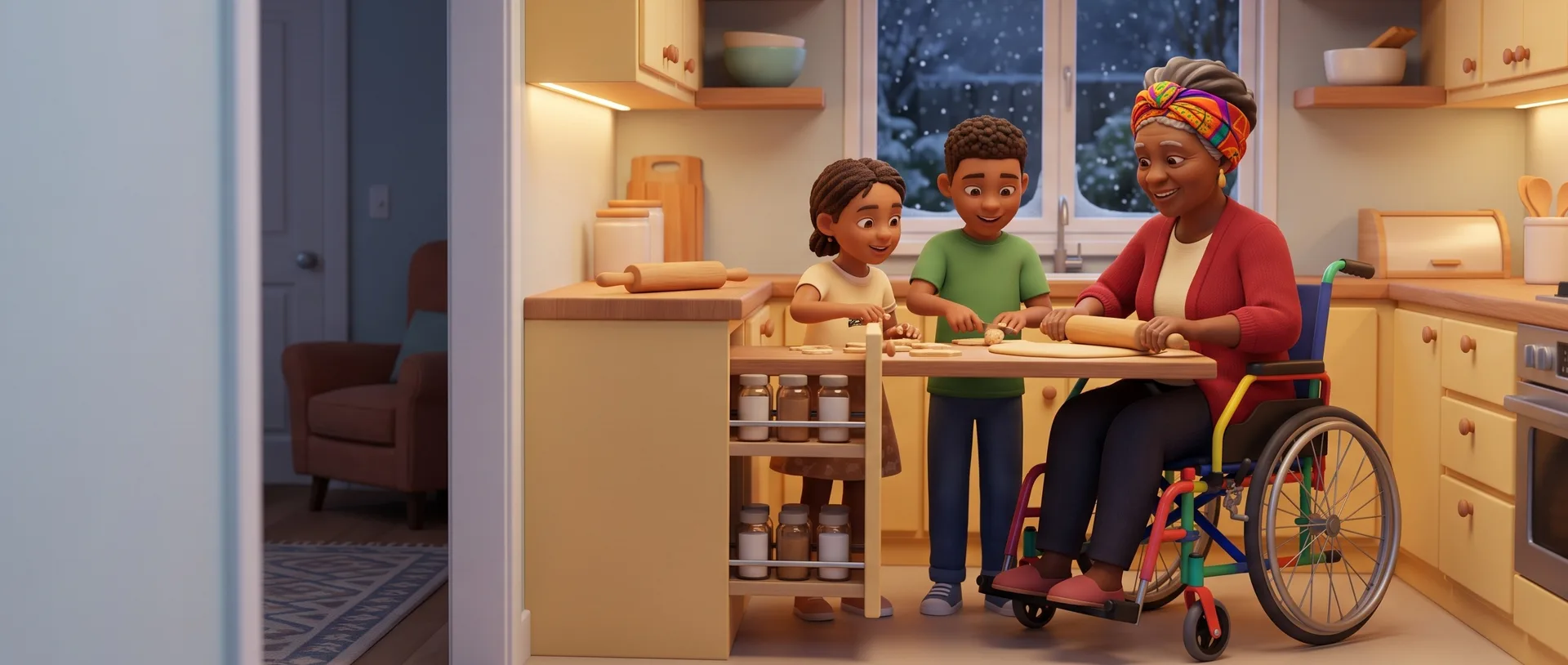
Some families take ideas from Fraser Health's suggestions for older adults: having family or friends round for a meal, a potluck or picnic in the garden or a favourite park, or a cooking class for older adults. Whether any of those appeal is your parent's call; help with the shopping and the cooking itself has its own guide, Help with everyday tasks and getting out of the house.
Take any change in eating to their care team
A change in eating, appetite or weight is not something this guide or a family is asked to interpret. It is worth raising with their doctor or care team, along with anything about special diets. Whether a parent is able to make a particular decision for themselves is not something a family is asked to settle on its own; where that is in question, it is for their doctor or care team, and the formal side differs by where your parent lives. When a parent's eating or weight seems to be changing covers what is useful to notice and bring.
When to ask a professional
This guide stops where a professional’s judgment starts. Bring what you’ve noticed, plainly, to your parent’s doctor or care team.
Sources
The outside sources this guide draws on.
Primary: Taken from the official source itself, and cited directly. Secondary: Established in recognised guidance, summarised here.
- PrimaryCalifornia Department of Aging (US), How Daily Routines Can Support Connection and Well-Being, 2026
- SecondarySCIE (UK), Freedom to choose and dignity in care, no date given
- PrimaryFraser Health (Canada), news item on eating with others, 2023
- PrimaryAged Care Quality and Safety Commission (Australia), Making choices about your food, drink and dining experience in aged care, 2026
- SecondaryDignity in Care (UK), Nutrition, no date given
Articles from this department
More in this department


How we source
Carefulness, made visible.
Named, not counted
Each guide names its sources and tags each one Primary or Secondary. It never counts sources at you.
Holding back
Where a part isn’t confirmed, a guide runs shorter and says what is missing.
Naming the limit
Every guide names where its authority ends, and who to ask instead.