
From far away
Getting organized: documents, contacts, and access
When something comes up from a distance, it helps to know where the right information is. This page sets out what is worth gathering, with your parent.
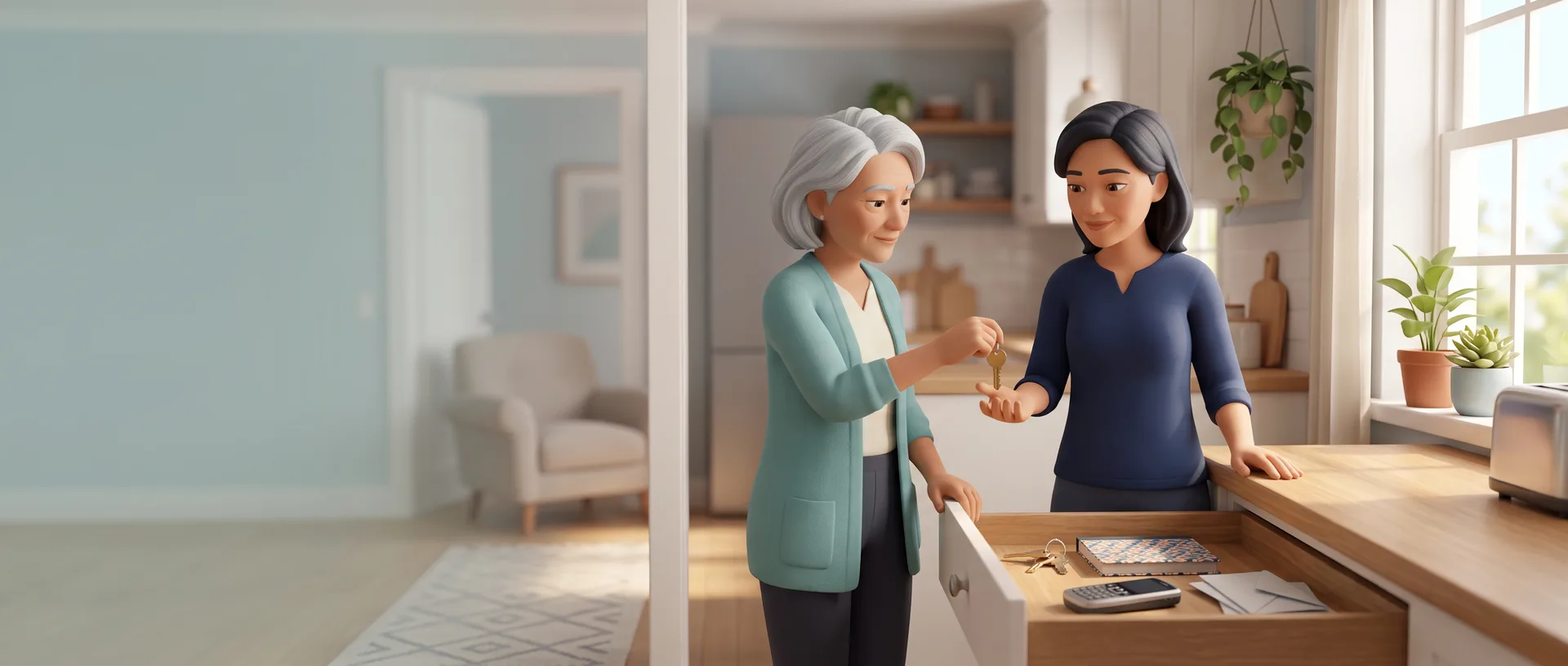
Your mum knows where everything is: the doctor's number pencilled inside a cupboard door, the folder of letters in the sideboard, the pharmacy she has used for years. From far away, you don't, and when a question comes up on the phone, neither of you can easily put the answer in front of the other. This page is a practical list of what can be gathered, with your parent, so it is easy to find when it's needed. Nothing on it is a test of how your parent is coping. Where medicines come up, this is information, not medical advice.
Start with the people
NIH MedlinePlus Magazine, a US government health publication, suggests gathering contact details for your parent's doctors, other healthcare providers and important contacts, and updating them regularly. Building the list with your parent means it holds the names they actually rely on, from their doctor to the friend down the road, not the ones you would guess.
What we don’t claim here
We don’t tell you whether a change is serious, or where ordinary ends and concerning begins. No authority sets that threshold, so we don’t imply one.
Who can weigh it: your parent’s doctor or care team, who know the person and the situation. Where to take it →
Keep one copy that everyone works from
The US National Institute on Aging says a notebook of contact numbers and other care details may be useful for keeping everyone involved informed. It also suggests making sure all of them can get to the notebook, and that it is reviewed regularly and updated as needed. One list in one place is easier to keep current than three half-lists in three kitchens. Who keeps it up to date is part of Sharing the load with siblings and family, and the people on it are the start of Setting up a support network from a distance.
Know where the papers are kept
The aim is to know where things are, not to hold them yourself. NIH MedlinePlus Magazine also suggests collecting and organising important legal, financial and medical documents, and keeping them up to date somewhere secure and easy to find. A Government of Canada checklist for people planning to age in place includes making sure loved ones know where important documents are, and talking with family about help that may be needed later. That checklist is written for the older person, a reminder that this is your parent's planning first.
Keep a list of medicines as a record
Ireland's Health Service Executive (HSE) encourages everyone who takes regular medicines to keep an up-to-date list of them, and says a list can help when medicines are being discussed with a healthcare professional. It recommends updating the list regularly, because medicines or doses may change. Its medication-safety key messages say it can be helpful to share the list with a family member or carer and to bring it to healthcare appointments; who sees your parent's list is for your parent to agree. The list stays a record. Questions about the medicines themselves are worth bringing to their doctor, pharmacist or care team, with your parent in the conversation if they want to be.
Agree who can ask, and how
Access to someone's health and money matters starts with them. NIH News in Health, from the US, suggests that at least one family member has the parent's permission to receive their medical and financial information, in whatever form that permission takes where your parent lives. Any account or record beyond that goes on the list only with your parent's knowledge and agreement.
Leave the legal side to proper advice
Legal and decision-making papers, the ones that set out who can act or decide on someone's behalf, are a separate matter from the lists on this page. How they work differs by place, and they are for proper advice where your parent lives.
When to ask a professional
This guide stops where a professional’s judgment starts. Bring what you’ve noticed, plainly, to your parent’s doctor or care team.
Sources
The outside sources this guide draws on.
Primary: Taken from the official source itself, and cited directly.
- PrimaryNational Institute on Aging (US), Sharing Caregiving Responsibilities, reviewed 2023
- PrimaryMedlinePlus Magazine, US National Institutes of Health, Helping from miles away: strategies for long-distance caregiving, 2024
- PrimaryNIH News in Health, US National Institutes of Health, Long-Distance Caregiving, 2020
- PrimaryHSE (Ireland), HSE encourages people to use a medicines list (press release), 2025
- PrimaryHSE (Ireland), Key messages for people promoting Know Check Ask, no date given
- PrimaryGovernment of Canada, Thinking about your future? Plan now to Age in Place: A checklist, 2025
Articles from this department
More in this department



How we source
Carefulness, made visible.
Named, not counted
Each guide names its sources and tags each one Primary or Secondary. It never counts sources at you.
Holding back
Where a part isn’t confirmed, a guide runs shorter and says what is missing.
Naming the limit
Every guide names where its authority ends, and who to ask instead.