
Safe at home
Changes families often notice
A plain-language tour to give you words for what you are seeing, without telling you what any of it means. It is meant to help you bring a clearer picture to your parent's doctor or care team.

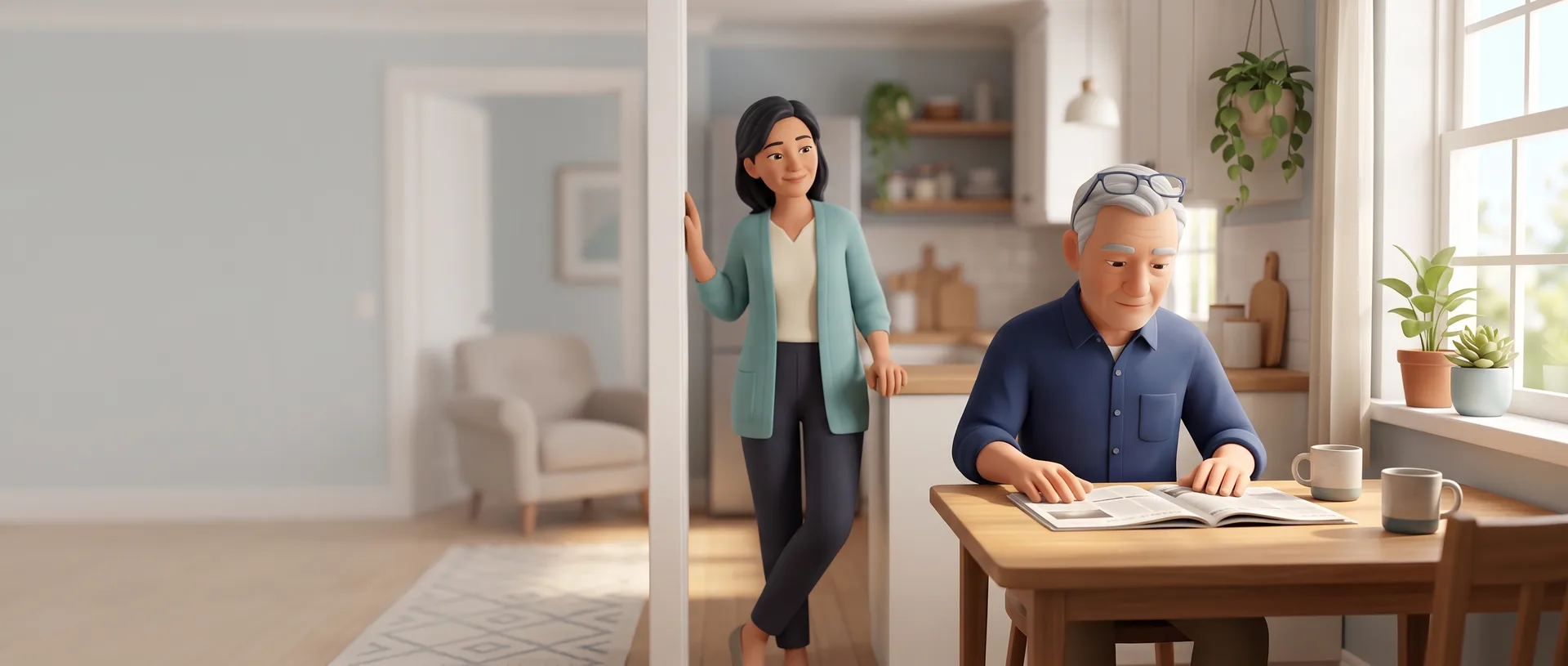
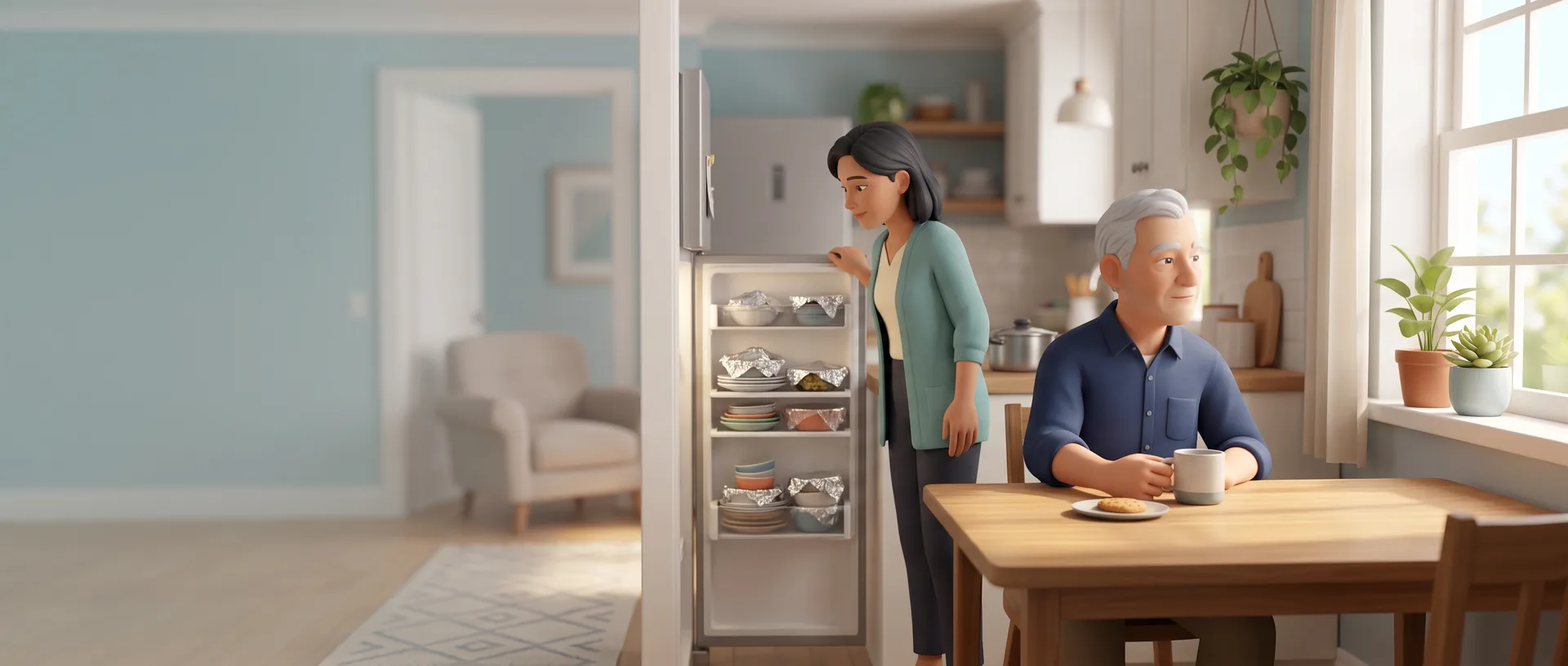
You're home for the weekend, sitting in the kitchen you grew up in, and something about the place feels different in a way you can't quite put into words. This page is for finding those words. It won't tell you what any of them mean, and it isn't a warning-signs checklist; it is information, not medical advice, set out so you can bring a clearer picture to your parent's doctor or care team.
Words for what you might be seeing
These are grouped just to make them easier to think about. Each is something to notice, not to interpret:
- Eating and weight: smaller appetite, meals left unfinished, less interest in food, or clothes fitting differently. There's a fuller page on this: When a parent's eating or weight seems to be changing.
- Sleep and rest: sleeping a lot more or a lot less than usual, awake through the night, or drowsy through the day.
- Memory and thinking: repeating questions or stories, losing track of dates, misplacing things, or finding conversations harder to follow. More on this: When memory or thinking seems different.
- Mood and interest: stepping back from things they used to enjoy, seeming flat, anxious, or more short-tempered than usual.
- Getting around: steadier or less steady on their feet, slower on stairs, harder to rise from a chair, or going out less. More on this: When getting around the home gets harder.
- Keeping up the home: post piling up, bills going unopened, plants or pets less tended, a usually tidy place starting to slip.
- Personal care: bathing, dressing, or grooming that seem harder, or less regular, than they used to be.
You might recognise one of these, several, or something that isn't on the list at all. Any one of them, on its own, can have many ordinary explanations.
What we don’t claim here
We don’t tell you whether a change is serious, or where ordinary ends and concerning begins. No authority sets that threshold, so we don’t imply one.
Who can weigh it: your parent’s doctor or care team, who know the person and the situation. Where to take it →
What some health bodies say, one area at a time
The NHS in England says unintentional weight loss can have many different causes. The Public Health Agency of Canada says memory loss is not always caused by dementia. Each of those statements covers one area only.
Two bodies speak directly to family members. The Public Health Agency of Canada says to talk to a healthcare provider if you have concerns about memory loss in yourself or someone you care about. Ireland's HSE lists being worried about an older relative who is becoming forgetful among its reasons to contact a doctor. For the question of ordinary ageing on its own, Normal aging, or something more: why no page can answer that takes it on directly.
Bringing a clearer picture
Your parent's account comes first, in their own words. What you add is what you have seen, described plainly, with the group it falls under if that helps. The US National Institute on Aging suggests taking along a list of every medicine and supplement your parent takes. For memory, the Alzheimer Society of Ireland, describing how a dementia diagnosis begins, says it can be helpful to note the changes causing concern before the visit.
Whatever you bring is a description, not a verdict. It is worth bringing to their doctor or care team as it stands.
Something that can't wait
Some situations need urgent help, not a description at a booked appointment, and this page doesn't judge which. How to reach emergency services in each place it covers is set out in How to reach urgent help, wherever you are.
When to ask a professional
This guide stops where a professional’s judgment starts. Bring what you’ve noticed, plainly, to your parent’s doctor or care team.
Sources
The outside sources this guide draws on.
Primary: Taken from the official source itself, and cited directly. Secondary: Established in recognised guidance, summarised here.
- PrimaryPublic Health Agency of Canada, Dementia: Symptoms and treatment, 2022
- PrimaryHSE (Ireland), Memory, reviewed 2024
- PrimaryNHS (England), Unintentional weight loss, reviewed 2025
- SecondaryAlzheimer Society of Ireland, Diagnosing Dementia, no date given
- PrimaryNational Institute on Aging (US), doctor visits page, reviewed 2023
Articles from this department
More in this department

How we source
Carefulness, made visible.
Named, not counted
Each guide names its sources and tags each one Primary or Secondary. It never counts sources at you.
Holding back
Where a part isn’t confirmed, a guide runs shorter and says what is missing.
Naming the limit
Every guide names where its authority ends, and who to ask instead.