
Safe at home
When memory or thinking seems different
This page will not test your parent's memory or name what might lie behind a change. It helps you describe what you have seen and bring it to your parent's doctor or care team.
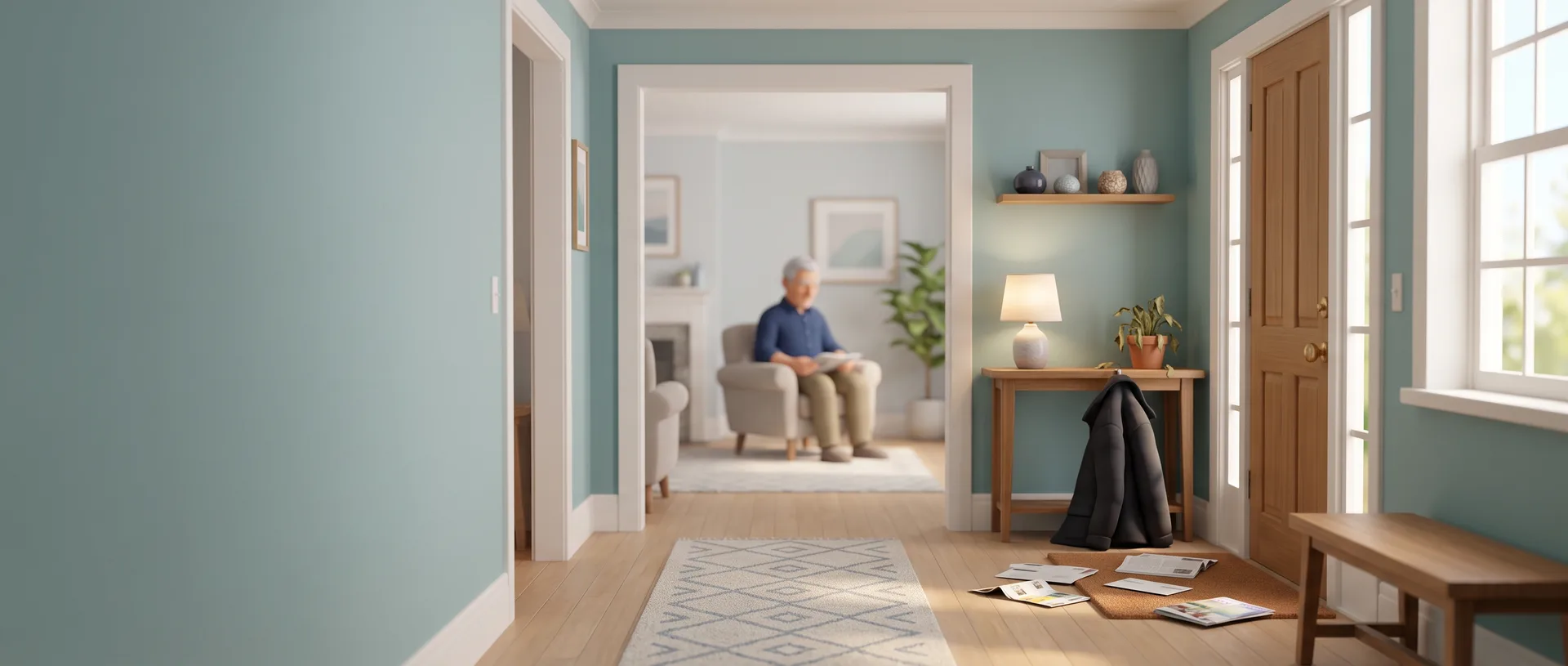
Your dad has done the crossword in pen every morning for as long as you can remember, and lately it's been left half-finished on the arm of his chair. Whether that means anything is not something this page will try to say. It is information, not medical advice, about putting what you've seen into words and bringing it to your parent's doctor or care team. For the wider picture, see Changes families often notice and Normal aging, or something more: why no page can answer that.
What families mention
These are the kinds of things families mention. They describe what people notice; they are not a checklist and not a test:
- repeating the same question or story within a short space of time
- misplacing everyday things, or finding them in unusual places
- losing track of dates, appointments, or which day it is
- searching for words that used to come easily
- finding familiar tasks (a recipe, the remote, paying a bill) harder to follow
- seeming lost for a moment in a conversation, or in a familiar place
- leaning more on notes, or on you, to get through the day
You might see one of these once, or several over time. Attach no meaning to any single one. That isn't yours or ours to do. They're simply things worth noticing and worth mentioning.
What we don’t claim here
We don’t tell you whether a change is serious, or where ordinary ends and concerning begins. No authority sets that threshold, so we don’t imply one.
Who can weigh it: your parent’s doctor or care team, who know the person and the situation. Where to take it →
What health bodies say about memory and age
According to the US National Institute on Aging, older adults may worry about their memory and other thinking abilities. The same institute says that forgetfulness can be part of normal ageing, while dementia is not a normal part of ageing.
Memory loss is not always caused by dementia, according to the Public Health Agency of Canada. Ireland's HSE says memory problems could be caused by something that can be treated. The National Institute on Aging says finding the cause of memory problems matters for deciding the best course of action, and that this is worked out with a doctor. This page names no cause, on purpose.
How professionals assess memory
NICE guidance in England recommends that, at an initial assessment for suspected dementia, professionals take a history from the person and, if possible, from someone who knows the person well, such as a family member. Ireland's HSE says that, in diagnosing Alzheimer's disease, a specialist will assess memory and other areas of mental ability, and that doctors take many other things into account. The Alzheimer Society of Ireland notes that no single test diagnoses dementia, and that confirming a diagnosis can take time, particularly in the early stages.
Getting ready for the appointment
In its advice on talking to a doctor about dementia, the Alzheimer Society of Canada suggests writing down when the changes began and whether they have shifted over time, and taking all medications, including vitamins and supplements, to the appointment. The National Institute on Aging suggests making a list of the questions or concerns your parent, or others who help, would like to raise.
Keeping your parent in the conversation
The appointment is about your parent, and their own sense of how their memory has been is theirs to give. What you have seen sits beside their account, not in place of it. Both are worth bringing to their doctor or care team, with your parent in the conversation.
If something can't wait
Some moments call for urgent help rather than a booked appointment, and nothing here weighs one against the other. How to reach urgent help, wherever you are lists how to contact emergency services in the places it covers.
When to ask a professional
This guide stops where a professional’s judgment starts. Bring what you’ve noticed, plainly, to your parent’s doctor or care team.
Sources
The outside sources this guide draws on.
Primary: Taken from the official source itself, and cited directly. Secondary: Established in recognised guidance, summarised here.
- PrimaryNational Institute on Aging (US), Memory Problems, Forgetfulness, and Aging, reviewed 2023
- PrimaryPublic Health Agency of Canada, Dementia: Symptoms and treatment, 2022
- PrimaryHSE (Ireland), Memory, reviewed 2024
- PrimaryNICE (England), Dementia: assessment, management and support (NG97), 2018, reviewed 2025
- PrimaryHSE (Ireland), Alzheimer's disease: diagnosis, reviewed 2026
- SecondaryAlzheimer Society of Ireland, Diagnosing Dementia, no date given
- SecondaryAlzheimer Society of Canada, Talking to your doctor about dementia, no date given
- PrimaryNational Institute on Aging (US), doctor visits page, reviewed 2023
Articles from this department
More in this department
How we source
Carefulness, made visible.
Named, not counted
Each guide names its sources and tags each one Primary or Secondary. It never counts sources at you.
Holding back
Where a part isn’t confirmed, a guide runs shorter and says what is missing.
Naming the limit
Every guide names where its authority ends, and who to ask instead.