
 WeHomeCare Family
 WeHomeCare Living
 WeHomeCare Connect
 WeHomeCare Campus
 WeHomeCare Omnibus
Technology
Getting ready for a video or phone appointment
Some health services offer appointments by video or phone. What some health services and bodies describe about getting ready: a quiet place to talk, the questions the person wants to ask, and what happens if the call drops.
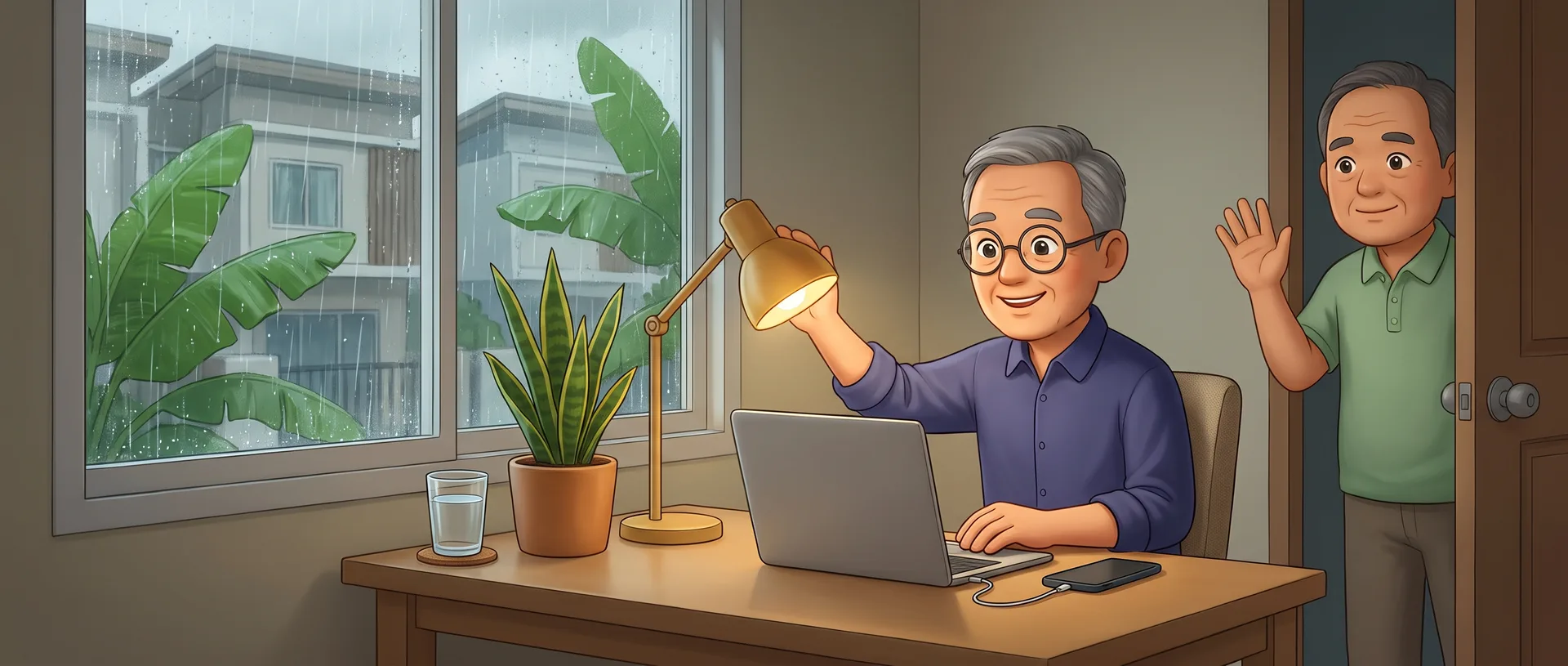
A chair has been pulled up to the desk in the spare room, and a phone sits charging beside it, because this appointment is by video, or perhaps by phone. The practical side is what this guide covers, as information rather than medical advice. Whether a call suits any health matter is not weighed up here, on purpose, and nothing here suggests what anyone ought to say about their health.
Ask the service how the appointment will work
In Ireland, the HSE says many hospital and community services offer video health appointments. The practical questions are for the service offering the appointment:
- If the call drops. For its own video health appointments, Ireland's HSE says a call that stops partway through can be rejoined, and that if it still does not work, the person might need to switch to a phone call, reschedule or book an in-person appointment.
- Who will be on the call. The College of Physicians and Surgeons of Ontario says an Ontario doctor providing virtual care must make sure the person is aware of anyone else who might be taking part, such as a nurse.
- Another kind of appointment. Ireland's HSE says that if the person is not happy to have a video call and use the camera, their healthcare professional may arrange another type of appointment, such as a phone call or an in-person appointment. Interior Health, a regional health authority in British Columbia, says a person can decide at any time that they do not want a virtual visit, and can ask their health-care provider about other arrangements.
Each of these speaks for its own service or province, so the service is the one to say how it works where the person lives.
What we don’t claim here
We don't recommend devices, apps or services, or say whether one is suitable for a person. That depends on the person and on advice from those who know them, so we don't imply an answer.
Who can weigh it: the person, with their doctor, occupational therapist or care team, and the service that offers the technology. Where to take it →
Find somewhere the person can talk freely
Canada Health Infoway, a federally funded not-for-profit organization, suggests trying to find a private, quiet and well-lit place for a virtual appointment. Which room that is, and whether the door stays shut, is the person's call.
Agree beforehand who will join
Canada Health Infoway suggests that if anyone else, such as a family member or caregiver, is joining a virtual appointment, they are available at the appointment time and have the details they need to join. Whether anyone joins at all is a question to put to the person before the day, not one to settle as the call begins.
Write the person's own questions down beforehand
Ireland's HSE suggests having a list of questions ready to ask during a video health appointment, so that nothing is forgotten. The list is the person's, in their words; someone helping can hold the pen without choosing what goes on it.
Leave the clinical judgement with the clinician
Ireland's HSE says a video appointment is not available for every situation, giving as an example a doctor or nurse needing to do a physical examination. Whether a remote appointment fits is for the clinician to judge with the person.
Anything that cannot wait for a booked call has its own guide: How to reach urgent help, wherever you are. The person's other health questions are worth bringing to their doctor or care team. Sources for this guide come from Ireland, Ontario and British Columbia, with a Canadian not-for-profit alongside them, and how remote appointments are offered differs by where the person lives. For remote appointments in Canada's other provinces and territories, or in Thailand, the search behind this guide turned up no official English-language source; the public health or social care body where the person lives can say what applies there.
When to ask a professional
This guide stops where a professional's judgment starts. Health questions go to the person's doctor or care team; how a service works goes to the service itself.
Sources
The outside sources this guide draws on.
Primary: Taken from the official source itself, and cited directly. Secondary: Established in recognised guidance, summarised here.
- PrimaryHSE (Ireland), Video health appointments, page last reviewed 2 April 2025
- SecondaryCanada Health Infoway (Canada), Learn About Virtual Care, no date shown, saved 5 November 2026
- PrimaryInterior Health (British Columbia, Canada), Virtual Care Services for Patients, no date shown, saved 5 November 2026
- PrimaryCollege of Physicians and Surgeons of Ontario (Ontario, Canada), What to Expect When Receiving Virtual Care from Ontario Doctors, no date shown, page read 5 November 2026
Articles from this department
More in this department



How we source
Carefulness, made visible.
Named, not counted
Each guide names its sources and tags each one Primary or Secondary. It never counts sources at you.
Holding back
Where a part isn’t confirmed, a guide runs shorter and says what is missing.
Naming the limit
Every guide names where its authority ends, and who to ask instead.