
Looking after yourself
Worn down by caring for a parent
When caring leaves you tired and stretched thin, it can help to have words for it. This page gathers how health and carers' organisations describe it, and points you to your own doctor.
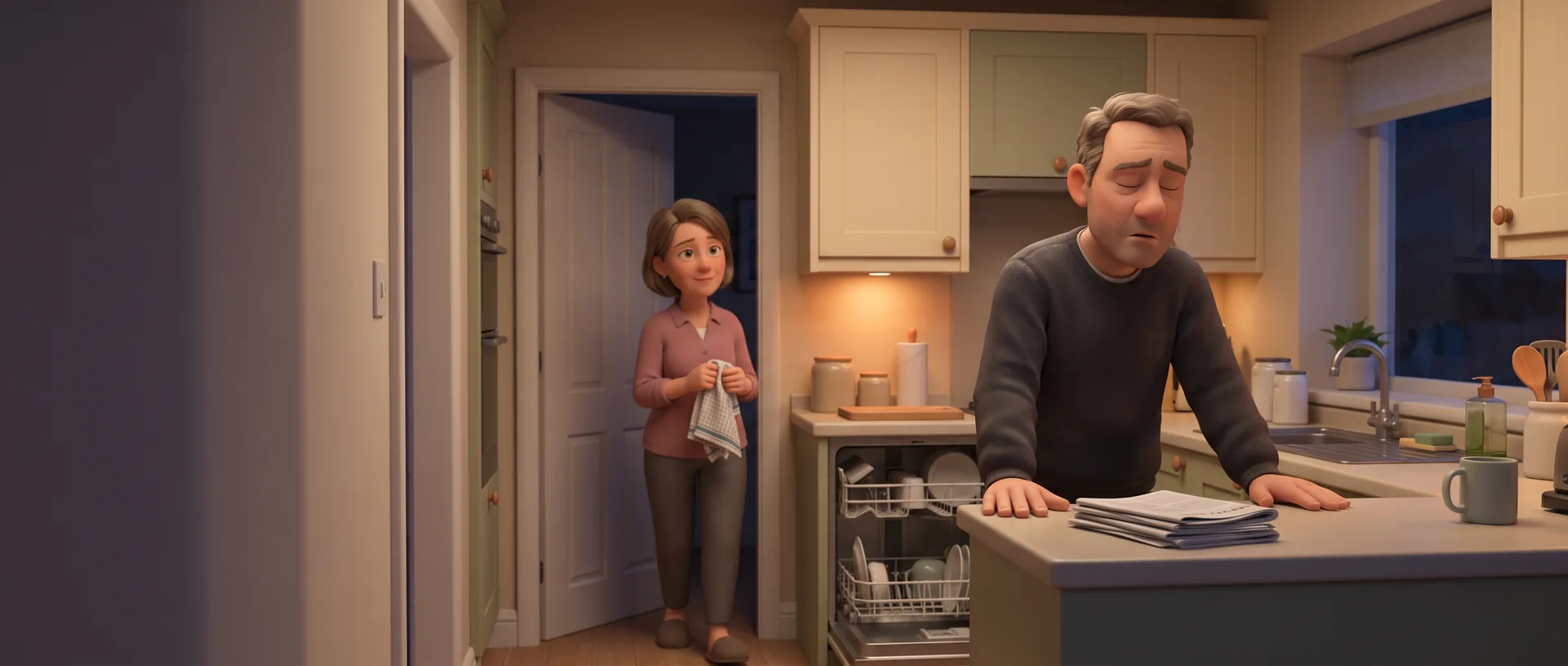
It is ten at night, the dishwasher is still full, and you have just been sharp with your partner over nothing much. Somewhere between the calls about your mum and the forms that never quite get finished, the evenings that used to be yours have gone. You may be wondering whether this is simply what caring for a parent is. This page offers general information, not medical advice, and it won't tell you what is happening to you: you won't find a quiz or a score here, and that is deliberate. What it can do is put some words to what carers describe, and help you raise it with your own doctor.
What carers describe
MedlinePlus, a US government health information service, says many caregivers are affected by stress that grows out of the emotional and physical strain of caring, and describes it in terms of feeling overwhelmed, tired much of the time, or easily irritated. Carers UK writes that a carer can grow steadily more exhausted, and that feeling tense or irritable can strain relationships. Carers UK also describes how caring can leave you feeling that you are losing control over your own life, with no clear way of getting it back.
The Alzheimer Society of Canada, writing for people caring for someone with dementia, describes some caregivers drawing away from friends and from things they once enjoyed, or feeling they barely have the energy for everyday tasks. The Canadian Mental Health Association holds both sides together: caring for someone can be rewarding, and it can also be tiring, overwhelming, confusing and stressful.
In Canada, a Statistics Canada study published in 2024 found that 74% of people caring for adults said caring had affected their health or wellbeing in some way. In Ireland, Family Carers Ireland's 2024 online survey of 2,127 family carers, a convenience sample that may not represent all carers, found that almost half (48%) reported severe loneliness and a further 28% moderate loneliness.
What we don’t claim here
We don’t tell you whether what you are feeling is serious, or where ordinary ends and something that needs attention begins. No authority sets that threshold, so we don’t imply one.
Who can weigh it: your own doctor, who knows you and your situation. Where to take it →
Take it to your own doctor
Your own doctor is the person to talk to about your own health, and it isn't something you need to settle alone at midnight.
What is useful to tell your own doctor
Carers UK suggests telling your own doctor that you are a carer, along with any extra pressures that might be affecting your physical health or emotional wellbeing. Carers UK also says that once your own doctor knows you are a carer, they can offer support, advice and information. MedlinePlus Magazine, from the US National Institutes of Health, likewise suggests making sure your doctor knows about the caring you do and how you have been feeling. You don't need a name for any of it before you go.
How carers describe getting some room back
The Alzheimer Society of Canada acknowledges that it can be hard to ask for help and to accept it, and says that asking is not a sign of inadequate caregiving. MedlinePlus lists asking for and accepting help, keeping in touch with family and friends, and looking into community services such as adult day care or respite, which many communities have, among the ways to ease caregiver stress; see A break from caring, and who can step in.
Carers UK says that even a couple of hours a week doing something you enjoy can make a considerable difference; Keeping your own life, work and relationships while you care has more on time of your own. Carers UK also says that talking with people in a similar situation can be a great help when you are feeling stressed, though not everyone finds that easy, and suggests talking to family and friends as well, if you can; Finding people who understand what you're going through covers how carers find them. Carers UK encourages carers to acknowledge their feelings and try not to bottle them up; Guilt, resentment and mixed feelings about caring for a parent turns to those feelings.
How a family can split the practical side between them is covered in Sharing the load with siblings and family.
Help for you, now
Carers UK says that sometimes the pressure of caring can become so intense or persistent that a carer may feel unable to cope. MedlinePlus Magazine suggests that if you are feeling overwhelmed, you talk to your own doctor or to a counsellor. If you ever feel you are in danger right now, contact your local emergency number.
When to ask a professional
This guide stops where a professional’s judgment starts. Bring what you’ve noticed, plainly, to your own doctor.
Sources
The outside sources this guide draws on.
Primary: Taken from the official source itself, and cited directly. Secondary: Established in recognised guidance, summarised here.
- SecondaryMedlinePlus, US National Library of Medicine, Caregiver Health, updated 2020
- SecondaryCarers UK, Dealing with depression and stress, no date given
- SecondaryCarers UK, Talking to your GP, no date given
- SecondaryCarers UK, Coping with guilt, resentment and other difficult emotions, no date given
- SecondaryMedlinePlus Magazine, US National Institutes of Health, Caring for yourself while caring for others, 2024
- SecondaryAlzheimer Society of Canada, Reducing caregiver stress, no date given
- SecondaryCanadian Mental Health Association, Care for the Caregiver, 2018
- SecondaryNational Seniors Council (Canada), Risks, costs and consequences of caregiving, citing Statistics Canada, 2024
- PrimaryFamily Carers Ireland, The State of Caring 2024, 2024
Articles from this department
More in this department



How we source
Carefulness, made visible.
Named, not counted
Each guide names its sources and tags each one Primary or Secondary. It never counts sources at you.
Holding back
Where a part isn’t confirmed, a guide runs shorter and says what is missing.
Naming the limit
Every guide names where its authority ends, and who to ask instead.